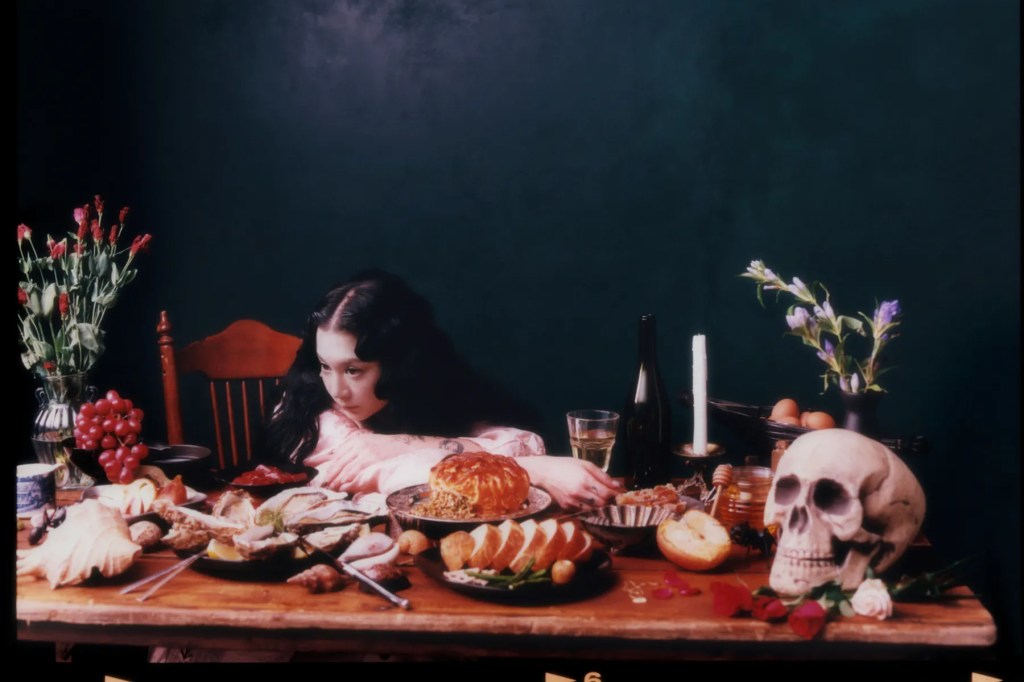
Japanese Breakfast has been on a journey of momentous highs since coming off touring for Jubilee, her last album that encompassed emotional dexterity with the contrasts and parallels derived from jubilant sentiments. Though the band wasn’t celebrating something grandiose, the Michelle Zauner-fronted group made it appear as such with tracks that brought the weight from the gravitational pull of the instrumentals. There is a known quality that one can hear from varying aspects. For Zauner, it has been the self-awareness behind her voice’s cadences, the driving force behind the craft as the production balances these dimensions. That continues to be the case on their new album, For Melancholy Brunettes (& sad women), even as it shifts from the more happy-cathartic sense of self to a resounding melancholy nature woven within the tracks. She isn’t as upbeat, allowing the dark to bleed through while elevating it, like how Psychopomp, Japanese Breakfast’s debut, tackled Asian exoticism, American culture, and grief. Writing has always been Zauner’s best musical quality, and IT continues to resonate while she delivers multidimensional songs. For Melancholy Brunettes (& sad women) is fantastic, despite one song not feeling as potent for me and having a little imbalance, though it’s worth the listen and more.
For Melancholy Brunettes (& sad women) isn’t what I’d call perfect; it’s a definitive incline in quality from Japanese Breakfast’s last album, especially as you hear how out of their realm they sound with a slight country twang in the strings. The album opens with “Here is Someone,” where the twangy strings penetrate forward, and you hear some elements of country and folk. The production isn’t as overbearing, keeping a steady flow that allows the vocals and writing to continue its stride as a definitive highlight. Fortunately, the instrumentations make a strong case, even though some milder moments with tonal homogenization can feel less potent and detached for some, however, I loved it. “Mega Cirkut” is the only track I left not loving as much. It felt a bit like a leftover from her previous jubilant sound of Jubilee but with more sad, reflective themes. It’s the yin to Jubilee’s yang and delivers on it with impact. It makes the processing of the words feel realer through Michelle Zauner’s intricate writing, like in “Honey Water,” where she becomes frustrated with her partner’s disloyalty and speaks about personality through seasons. That sense is capped with the instrumental break, almost like the tick before it furthers.
Writing is an essence of self, and although songwriting is subjective, laziness can manifest and sour the listener’s experience. Michelle Zauner avoids this pitfall even with a stricter tonal direction. As I’ve noted, melancholy is a significant focus with a sense of sheer relatability as Zauner humanizes herself to reflect the grounded individual, like in “Leda,” where she sings about how difficult connectivity can be without meaningful discussions beyond the apropos. There is an ethereal wonder in how these songs maintain a seamless throughline that encapsulates the album’s runtime and more. Despite being only 30 minutes long, it doesn’t feel short or rushed; it allows most tracks to breathe while retaining their individualized identities, like how “Picture Window” taps into the paranoia of loneliness. Or “Magic Mountain,” which presents a narrative in modernity with a focus on change, further enhancing her sense of wonder as the music evolves. The consistent quality elevates it above Jubilee, even though I enjoyed dancing to the upbeat sounds more. I appreciate feeling happy, but that doesn’t create a bias against the negative because lyrical connectivity resonates deeply. It’s safe to say I left the project feeling fully immersed and loving it intensely, especially with everything they accomplished with the strings.
Listening to the twangy strings in the beginning and seeing Blake Mills produce it added a sense of wonder to what I’d eventually hear. That’s a concoction that is bound to hit, considering his work with artists like Feist and Fiona Apple and how pivotal the strings are in the production. It’s a change of pace in Japanese Breakfast’s indie pop ecosphere, enhancing the tonal consistency with more somber writing and performances. Blake Mills and Japanese Breakfast aren’t simply working with these notes, but their presence shines through in the wonderfully hypnotic “Picture Window” or the classical direction of “Orlando In Love.” It’s easy to digest on the surface; however, Zauner’s writing goes beyond that and transcends these sounds, as in “Men In Bars,” where we catch a glimpse of feelings arising from mistakes and hard times. Jeff Bridges’ inclusion adds significant depth as a contrasting figure that responds; they come together with these omens and forgive each other. It’s one of Japanese Breakfast’s more country-focused tracks, reminding me of a Kenny Rogers duet. Unlike Jubilee, its throughline is smoother and has a definitive conclusion, despite the urge to replay both, as motions instantly jolt my hand to the play button again.
For Melancholy Brunettes (& sad women) is undoubtedly Japanese Breakfast’s best album to date, stemming from maturity on all fronts, particularly in its structure. The second half maintains its balance, adhering to its throughline while continuously presenting something fresh on a platter. There’s something about it that kept me holding onto it longer than I do with most records, and much of that comes from finally hearing what has been on Zauner’s mind since Jubilee. I recommend it highly, even though it’s short, since I believe there is more substance than what the surface layer may suggest. Give it a spin, and let me know if you love it or prefer Jubilee more; this antithesis of an album is delivered in the directions it seems to have self-imposed.


Leave a Reply