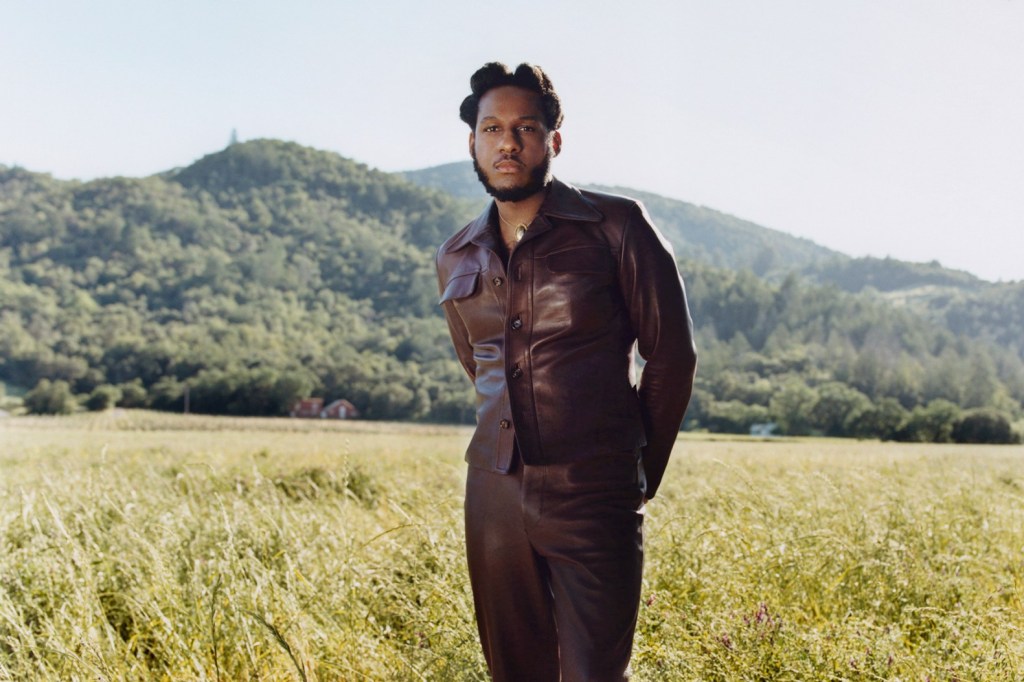
Leon Bridges’ latest album Leon is a self-reflective moment that takes us back to his roots in Texas. He’s doing so via lyrics and production, with the latter using sounds that resonate more with the South, specifically Country music, becoming more of a touchstone of who he has been since the beginning. From Coming Home to Gold Digger Sounds, Leon Bridges has constituted this identity that’s tied to his musical roots in conjunction with the culture he was raised in, though he does fight against it on Good Thing by pushing away the iconography established with his debut, aka the “retro-soul guy,” as Leon Bridges would put it. From listening to Leon, I felt this was closer to the heart from a lyrical standpoint, as we are taken back to his home like a more poignant Coming Home. There is an institutional foundation where the music comes with a clear direction, sounding like a mix between some of the eccentricities found in Paul Simon’s Graceland with tender soulful vocals by Leon Bridges, though slightly stunted by some typicality in the performances; however, that doesn’t shift it away from being his best work to date.
Compared to Sam Cooke with his first album, Leon Bridges is more to the comparison than just sound. We’ve heard artists deliver these opened wall tracks that speak to the nature of their emotional perspective when looking at society as a whole—think “A Change Is Going To Come” by Cooke or “Strange Fruit,” by Billie Holiday and how there is this implementation of self-worth in having hope or having an understanding that change is a long way coming. For Bridges, “When a Man Cries” comes to me more like “What’s Going On” by Marvin Gaye, in that Bridges is looking at the world through a thinly veiled lens, and how the bad is unavoidable, using a supposed rarity to drive impact. Leon is musically infectious in many ways, and like the opening track, it’s the production that speaks wonders to the album’s impact from multiple constructions; at its core, the twangy strings are a sound to hear, especially as they bring a different cadence than that of previous styles. It’s an elevated production that taps into the essence of Bridges’s soul while offering new avenues for him to explore, specifically via the influence country music brings through the blues.
Leon is unapologetically Soul-Country, but not so much Country in the typical stance. The minor details bring the blues and soul underlying textures, giving weight to the acoustic strings, percussion, and bongos when used in songs, like on the intoxicating “Never Satisfied.” The producers help establish the sound, with Austin Jenkins as the only returning collaborator, Daniel Tashian and Ian Fitchuk bring more of a songwriter’s sight and evolve his sound past the smooth coolness he imbued on his last album, Gold-Diggers Sound. By songwriter’s sight, I refer to those who know the right cadences to elevate the potency of artists with something to say from the heart. Part of it emanates from the acoustic guitar, the songwriter’s best friend, and the atmospheric textures in the overall production that elevate the vocals, like how gospel music’s harmonizations do so for the soloist or multiple leads. It isn’t so apropos here, instead, it’s pacing slowly while finding the right moments to bolster the groove, like on “Peaceful Place.” However, what shines over all of it is the guitar strings, like on “Ivy” where the acoustics are more twangy and the steel pedals are this angelic contrast that comes with crisp synergy.
Accompanying the great production is fantastic songwriting that isn’t afraid to break down walls, considering how central it is to Leon Bridges, focusing heavily on his roots and giving us more of a backdrop to his life. “Laredo” speaks about around 10 years ago, when Leon Bridges witnessed someone on stage killing it, aiming for gold, and how it kicked something in him to continue the seriousness held in music. “That’s What I Love” centers on Bridges’s upbringing through the perspective of culture, as he delivers an oozing groovy time. It isn’t trying to come across as a fun endeavor, but instead more nostalgic and feeling the love all around, from the music to the women, becoming more of an amendment to growing up. It continues with “Pantera City,” where he takes us back to the summertime growing up and what reminds him of home. The lyrical content fluctuates in content, giving you sentiments that speak to Bridges, like how “Can’t Have It All” is about the passage of time or how “Simplify” leans onto how one looks back the youth with life being so simple. It is that, and the straightforwardness made it a much better journey, even when the pizzaz is all nuanced.
Leon is Leon Bridges’s best and most intimate work to date. It has visceral depth coming from varying angles, never seeming to forget who he is and what he loves to create. Though it’s a slight change in sound, there is a still beating heart of the R&B/Soul-like vocal textures that add definition to the changes getting done. It’s damn near perfect, but unfortunately, it does end when you can keep the vibes going, but restarting and going through it again is as much rewarding as the whataboutism there. I loved this album and there are no dull moments to reflect on but I can’t give this perfect marks since some of its familiarity can deter those looking for something different. Even if that’s the case, the delivery and impact here will take away those thoughts, as it swiftly did with me.


Leave a Reply