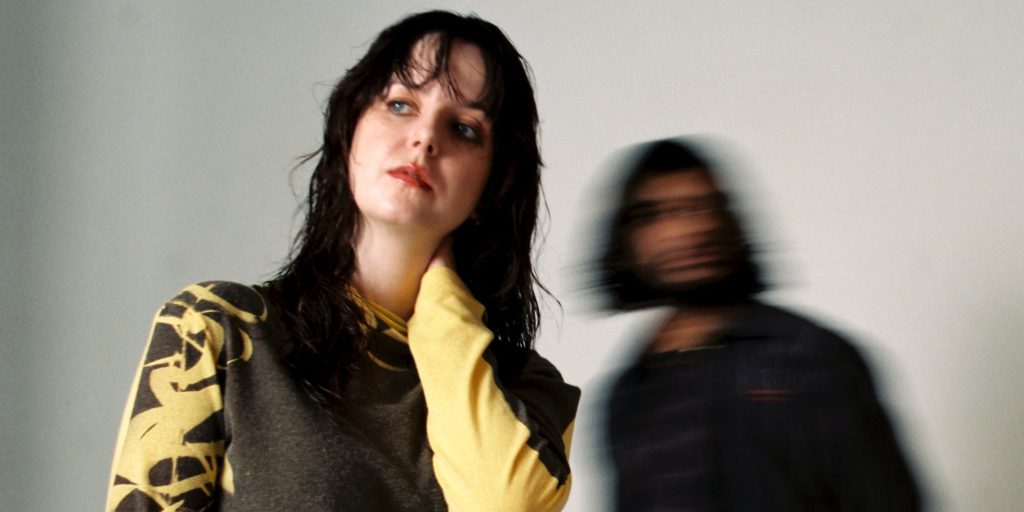
Emerging from the depths of the Paul Institute (a venture taken by elusive artist Jai Paul and his brother A. K. Paul) was Fabiana Palladino. I’ve known of Paul and his music via friends, and have dabbled minimally; however, when receiving recommendations via articles and singles, it was safe to say my intrigue for Palladino’s debut album, Fabiana Palladino, wasn’t a fleeting one—so as I sat back and played it, I understood why she is one to keep an eye on. Unfortunately, the positives don’t substantially outweigh the negatives; it leaves you with intrigue for a burgeoning career. The negatives are the lukewarm production that looks to ooze out the everlasting and sobering neon lights of vibe-driven pop club sounds of the 80s, leaning heavily into synths as a steering wheel. It’s more whimsical pop-R&B music alla artists like Kate Bush, Prince, and Vesta Williams, though not as potently consistent. Palladino is weaving these influences into something cohesive and fluid, but she predominately makes it safe, never popping in the ears. I wanted to like this more than I did, but sometimes it felt like it wasn’t picking up, even with a solid opener and closer.
It’s safe to say I was modestly disappointed, but it still left me feeling optimistic because of how Fabiano Palladino’s self-titled album starts and ends. “Closer” opens the album with this more empathetic and loverly Soul/R&B pop hybrid that focuses heavily on the percussion’s rhythm, elevating her vocals and giving us something tender and enlightening. “Forever” is more minimalist, focusing more on the vocals to whisk you away on a melancholy note, even though you’re hearing Palladino’s vulnerability. However, what comes in between is inconsistent. It wavers between some heavier and neat 80s aesthetic pop-R&B and more tepid productions, despite keeping it centered and focused in one cohesive direction. Much of it plays it safe. The production doesn’t take chances, rarely feeling provocative. It’s as if she’s taking these sonic influences and carefully constructing them without some sense of chaos. “I Can’t Dream Anymore,” “Give Me A Sign,” and “Deeper,” never get as elaborative or loose as “In The Fire” or “Can You Look In The Mirror.” It’s less meandering and more reflective of an artist trying to stabilize and field identity and set herself up for an expansive career as more music gets produced.
The production being what it is, the element of surprise dwindles as the music tapers into the conventional for retro. It doesn’t know when to be provocative or add some flavor beyond synths, being more just fundamentalist consistency. Playing it safe doesn’t allow its session musicians to shine, making their inclusion feel for naught. It doesn’t flounder in quality, it flounders in its intuitiveness, especially when you have Rob Moose on strings, Steve Ferrone on drums, and her father, Pino Palladino on the bass, but that isn’t the case for all songs. Amongst other session performers, Fabiana Palladino is floating on a river of quaint fluidity, tiring you as the songs progress with slight mediocrity. Fortunately, there is some stuff to love about the album, beyond just lingering hope for growth, and that’s when Palladino’s vocals are in command, making the production feel fiduciary to the final construct. Some that become significant highlights are “I Care” and “Shoulda,” the latter of which creates magic with its strings and takes you on an entrenching journey of doubt. Compared to “I Can’t Dream Anymore” where it drones on without adding much with its synths, it keeps it rather dull, even if the vocals are consistent.
“Stay With Me Through The Night” is the one track that has stuck with me the most, specifically because it does the retro-pop beautifully. From its production to its vocals, it has all the elements to make something grand, but for what surrounds it, it’s saying a lot. I wanted to like this more than I did, but it doesn’t have the juice to keep you from start to finish. If it did, I’d be more positive about the woven intricacies of the album, but as it flows, there is little to latch on to. When reflecting on its retro notes, there is something to behold and understand from the production, but sometimes you want more pizzazz when you think of retro. And it isn’t this want or need from her, but more that the production could’ve been better, whether more in-song transitions or more elevated instrumentations connecting in sync. It becomes more disappointing when you have tracks like “Stay With Me Through The Night,” “I Care,” and “In The Fire” being so memorable. I didn’t hate the album, I did enjoy it for what it was aiming to do and I’m glad it gets close enough for me even to say that despite my lukewarm reaction, it is still worth a shot.


Leave a Reply