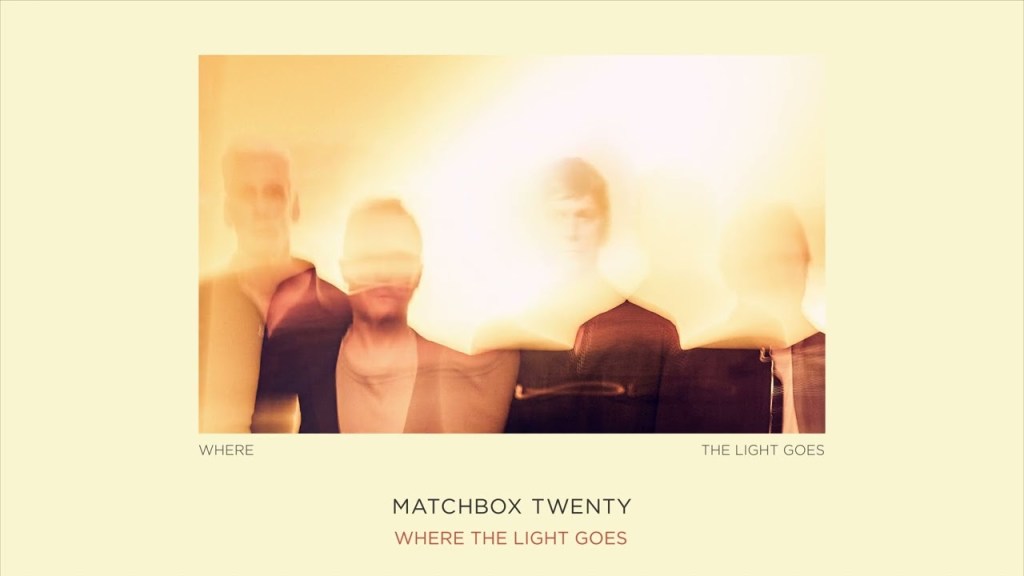
Ever since the release of Barbie, one band has returned to the crevices of my music-loving mind and has found a home again after nearly a decade-plus since revisiting their first three albums. That band is Matchbox Twenty, and unbeknownst to me, they dropped their fifth album, Where The Light Goes, earlier this summer. As I wound down and gave it multiple spins, along with revisiting Yourself or Someone Like You, Mad Season, & More Than You Think You Are, one thing is evident: they haven’t lost their stride; even through the lesser moments, it’s what one could expect of Matchbox Twenty and more. Sometimes, the expected can be exemplary despite wanting change, but this reminded me why Matchbox Twenty was my favorite band in the early 2000s. Their brand of Alternative Rock brings influence from Arena Rock, Grunge, and Pop, and as we turn the page with their new album, two of the influences are resonant, and unlike 2012’s North, what they construct is melodically stout and hooking, finding a balance between genre complexions that grounds the performances, even some of the content gets delivered in a corny way.
Where The Light Goes isn’t some profound production juggernaut that will have you rethinking how evolutionary Matchbox Twenty is or has become, but more so seeing how they’ve continued assimilating and growing through different soundscapes. What was evident with their first three albums is their blend of poppy-catchy choruses as lavish contrast to the angsty grunge-like textures in some of their most well-known singles like “Real World” and “Back 2 Good.” That has completely shifted over the past decade as they leaned more into the brighter side of pop rock, and musically, that’s the feeling coating much of the production on their new album. You may feel the hesitation toward hitting play because of the mediocrity of their last album, North; however, this improves with Rob Thomas continuing to write and deliver these beautifully poetically driven stories in between some rightful corniness, like “Rebels,” which comes off as preachy with its connectivity to the youth, and showing a path toward maturity. The slight corniness comes from varying factions, like the chorus of “Friends,” a song I enjoyed, or the tried and tired melodies of “One Hit Love,” but surrounding them are fantastic songs.
Matchbox Twenty’s maturity in music has been a significant highlight, especially with the new soundscapes they continue to create. Like More Than You Think You Are, they add more into the fray instead of the standard four-piece collective of strings and drums that they were to begin. Where The Light Goes comes with some whimsically enchanting performances from both sides of the aisle, offering fans something to reflect on and enjoy, like “Warm Blood,” where most of the great stuff begins. There’s an underlying motif of hope and togetherness with Rob Thomas finding new ways to write around them. Sometimes more apparent than not, it’s a significant boost to the quality when Thomas isn’t forcing a heightened attempt of bridging past and new, like with the song “She’s So Mean” from North. The band has clear direction, though more reflective within the instrumentations/production; there is a balance to keep you engaged, like giving us two wicked great guitar solos back to back in “Warm Blood.” “Queen of New York City” feels like a spiritual successor to “Hey There Delilah” by Plain White T’s, except this is more fun and empowering, without faltering into trite descriptors in the story.
From “Warm Blood” to “Selling Faith,” you get a fantastic run of songs that sees Matchbox Twenty replicating sounds that can readily get mistaken for music from someone else; however, Rob Thomas brings his own sense of direction and cadence, so even if “Selling Faith” is reminiscent of Cleopatra era Lumineers, it has just enough touch-ups to make it sound original to Matchbox Twenty’s style. “Don’t Get Me Wrong” sounds like a polished but rudimentary Alt-Pop-Punk-like song that hits due to Thomas’s vocal performance, which makes out to be something overly catchy despite being a little more simple, comparatively speaking. I’m not here heralding the last 2/3rds as something unique and fantastic; instead, what makes me enjoy this album more is how effective it is at doing what it wants to do, whether it is a ballad like with “Hand On Every Word,” which has a wonderfully tender performance by Thomas, and equally the band as they form this nuanced instrumentation where the levels are played low but the synergy is high.
One song that hit the nail on both sides is “No Other Love” with vocalist Amanda Shires. It’s a beautiful alt-synth pop rock song that feels like opening a capsule to duets from the mid-2000s. It’s a testament to the production, which sees a shift from their primary producer on the first four albums while retaining consistency. Where The Light Goes isn’t produced by Matt Selertic, instead done by Gregg Wattenberg, best known for his piano-laced production on 2004’s The Battle for Everything by Five For Fighting, and the influence gets heard throughout, specifically with “Hand On Every Word.” Additional production comes from Paul Doucette and Kyle Cook, members of the band, who, along with Wattenberg, help round out a consistent incline and decline, allowing for a solid journey that’s still rugged. It closes on a high note, leaving you wanting to go back and revisit those first few albums because there are plenty of gems there.


Leave a Reply